Nose Hair Waxing: Types, Side Effects, and Safe Alternatives

Videos showing nose hair removal with wax have become one of the most popular topics in recent years. Whether out of personal curiosity, following a trend, or simply because of the “can’t look away” effect, watching this process can be truly mesmerizing.
But is it worth trying the procedure yourself? Unlike trimming or shaving, wax hair removal provides longer-lasting results, allowing you to forget about stray hairs for a while.
It’s important to remember: you should never remove all the hair from your nose. Nose hairs serve a vital function—they filter the air and protect your respiratory tract from dust, bacteria, and other particles. That’s why waxing this area is a delicate procedure best entrusted to professionals.
If you want to learn how to perform nose waxing safely and effectively, check out our latest guide.
Why it’s important to consult a specialist
First and foremost, it’s crucial to see a licensed waxing specialist who performs this procedure regularly. Special attention should be paid to the quality of the wax used and the technique applied, especially when dealing with sensitive areas like the nasal region. When planning your procedure, choose a reputable salon or spa.
While it may be tempting to try nose waxing at home, dermatologists strongly advise against it. Self-removal of hair in sensitive areas of the face, especially inside the nostrils, can be dangerous due to the proximity of the mucous membrane and numerous blood vessels.
Overall, facial waxing is considered safe when performed by qualified specialists. Nevertheless, there is always a risk of skin irritation, burns, or heightened sensitivity, so choosing the right professional and high-quality materials is essential.
What to Expect from Full Nasal Hair Waxing
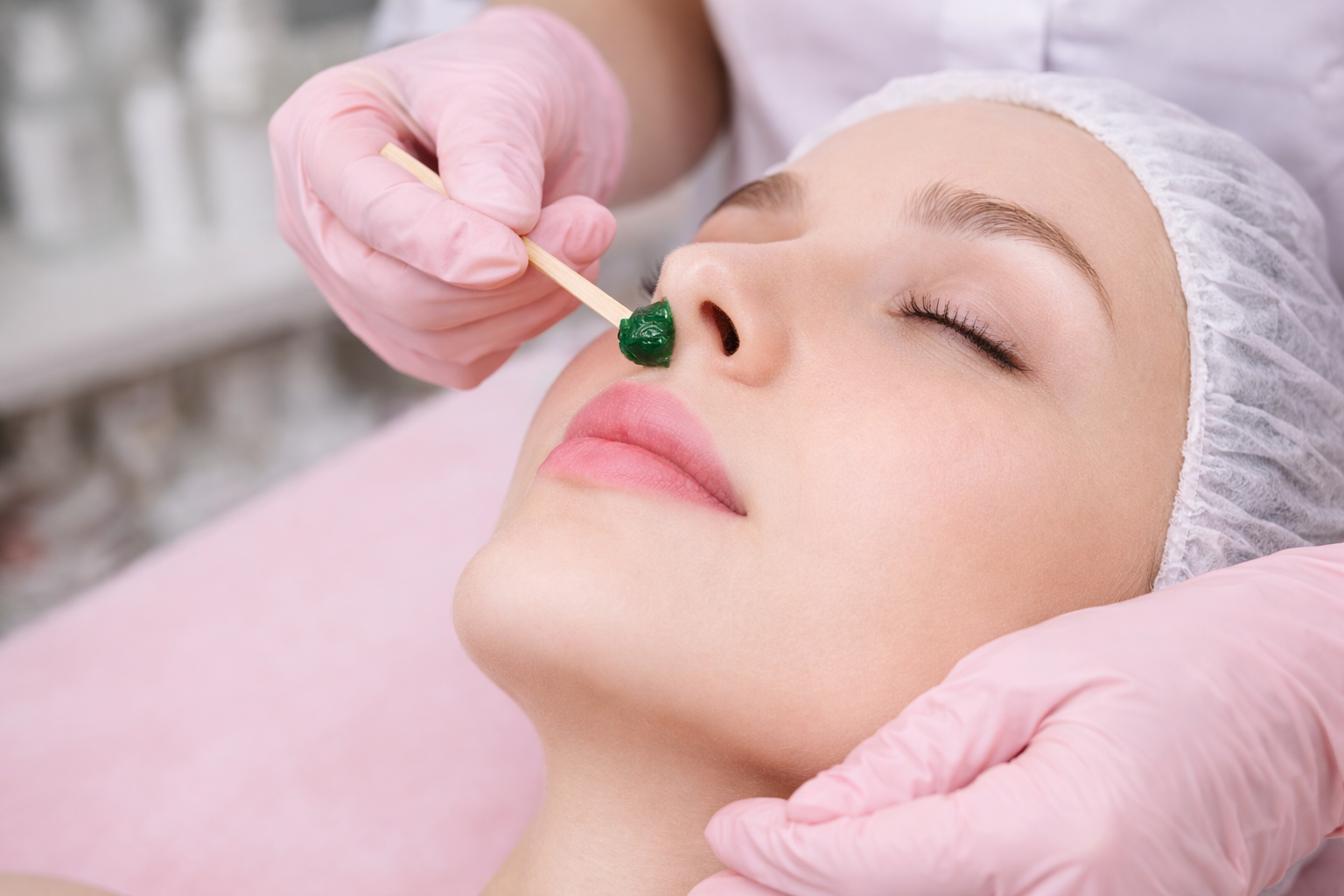
Now you’re probably wondering, “How is it even possible to wax inside the nose?” It’s actually much simpler than it sounds. First, the technician applies a small amount of wax to the tip of a miniature wooden applicator shaped like a small ball and lets it cool slightly. Then, the applicator is carefully inserted into the nostril—but not pushed beyond the edge of the nose—for your safety. After that, the cosmetologist quickly removes the applicator, aiming to pull out the unwanted hairs along with it.
What Is Partial Nasal Hair Waxing?
This procedure usually removes only the hairs along the edges of the nostrils, making it less aggressive than classic full nasal waxing while effectively eliminating the hairs that most often stick out and cause discomfort. Since the product does not penetrate deeply into the nose, hairs can also be removed using sugaring. This method is gentler on the skin, and many people find it less painful compared to waxing.




Possible Side Effects of Nose Waxing
Removing nose hair with wax is an extremely delicate procedure that carries certain risks. Nose hairs play an important protective role: they filter the air, trapping bacteria and dust, and prevent harmful particles from entering the respiratory tract. Waxing them can lead to irritation of the mucous membrane and increases the risk of infections.
Nose waxing should only be performed on healthy skin. If the inner surface of the nose is damaged or irritated, the procedure should be postponed until full recovery. It is important to remove only visible hairs and not attempt to reach deeper than what can be seen.
Possible side effects include redness, mild pain, bumps, and ingrown hairs. The nostrils are a very sensitive area, so discomfort during waxing here is usually stronger than, for example, on the legs or underarms.
The risks increase with self-treatment at home. Wax that is heated incorrectly can burn the mucous membrane, and aggressive homemade products are often too harsh for the delicate skin inside the nostrils. Repeating the procedure in the same area also increases the likelihood of irritation and damage.
Conclusion: Nose waxing is a delicate and potentially risky procedure. To minimize risks, it is best to entrust it to professionals.
Aftercare
Similar to waxing other areas of the face, the procedure may cause mild irritation and discomfort. In the first 48 hours, it is recommended to:
• avoid very humid or steam-filled environments;
• wash your face with warm (not hot) water;
• refrain from facial steam treatments and avoid staying over boiling water longer than necessary.
To soothe the skin around the nose, you can use a light, non-greasy, non-comedogenic lotion or aloe gel. It is important not to apply these products inside the nostrils to prevent additional irritation, reduce the risk of infection, and avoid interfering with breathing.
How often should nose waxing be done?
For most areas, waxing is recommended every 3–4 weeks. However, for more noticeable areas like the face—such as the upper lip or nose—some prefer to have the procedure every 2 weeks.
Regular waxing makes the hair softer and finer, and each subsequent session becomes less painful.
Alternative Methods for Removing Nose Hair Without Wax
If waxing isn’t suitable for you, it doesn’t mean you have to just wait for the hair to grow back. There are many simple and safe alternatives, such as carefully trimming nose hair. Special trimmers or manicure scissors are convenient for this purpose. These tools make caring for hard-to-reach areas quick, comfortable, and safe.
⸻



The idea of nose waxing can make many people shudder. Nevertheless, for those who want to remove even the tiniest hairs, a visit to a professional can provide a feeling of freshness and confidence. Experts note that the procedure is generally safe when performed in a reputable salon. At the same time, they strongly advise against trying it yourself — the risk of damaging the delicate mucous membrane or hitting blood vessels in this sensitive area is too high.
Published: 31.03.2026 15:32
Times Read: 473
8183 bought
ID: 3678
196 ₴
3825 bought
ID: 3688
303 ₴